What’s Happening in Your Pond?

Identify what you’re seeing, understand the likely cause, and find the most suitable BBA solution.

What’s Happening in Your Pond?
What you’re seeing Likely cause Recommended solution
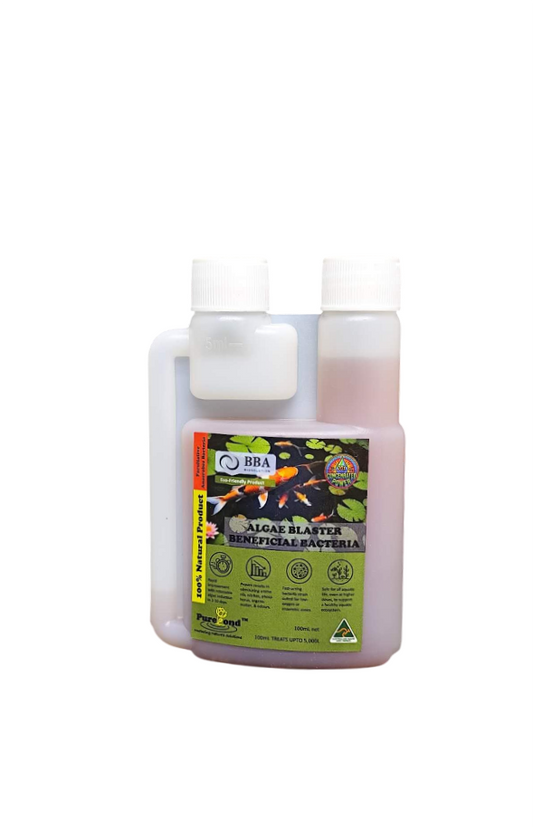
Green strands attached to rocks, liners or pumps Filamentous algae or blanket weed PurePond Algae Blaster
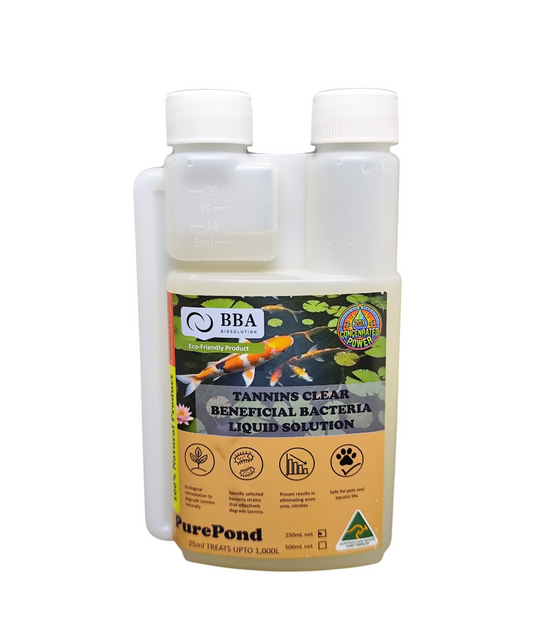
Brown or amber tea-stained water Dissolved tannins from eucalyptus and other leaves PurePond Tannins Clear Liquid/Solid
Cloudy, milky or murky water Fine suspended organic particles or microbial imbalance PurePond Bio-Flocculant
Black sludge or foul odours from the pond base Anaerobic organic matter accumulation PurePond Sludge Away
Slower biological performance during winter Reduced microbial activity at low water temperatures PurePond Cold-Active Bacteria
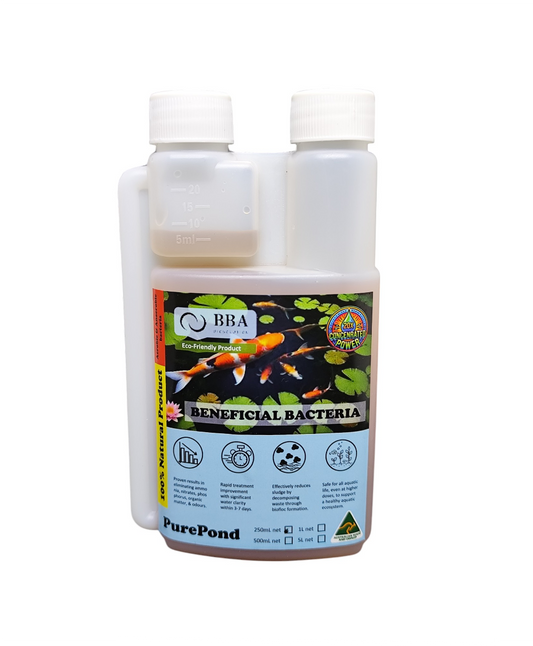
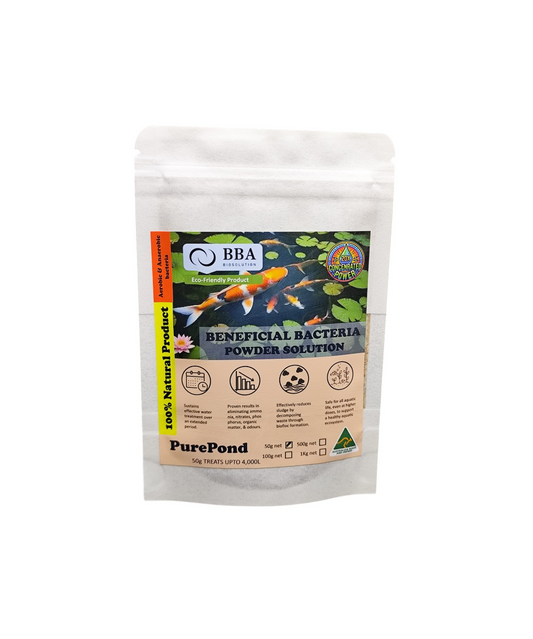
Ammonia or nitrite spikes, or a newly established pond Immature or disrupted biological filtration PurePond Beneficial Bacteria Liquid/Solid
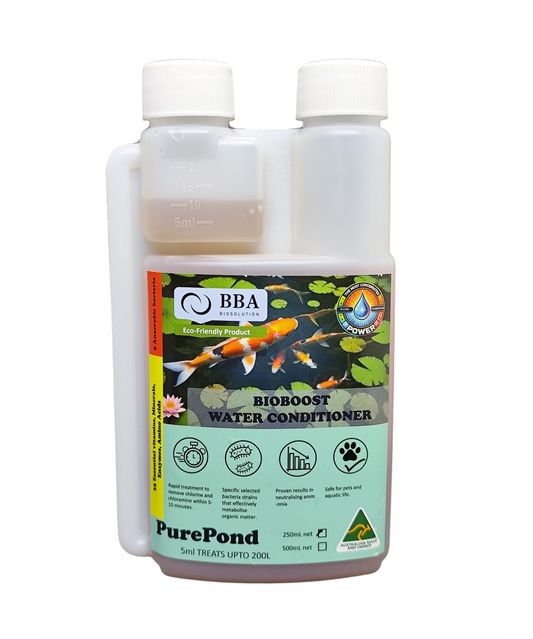
Adding tap water or establishing a new pond Chlorine and chloramine in mains water PurePond BioBoost Water Conditioner
Routine year-round pond maintenance Continuous organic waste and nutrient inputs PurePond 4-in-1 Maintenance

Not sure which solution is right for your pond? Contact BBA technical support or one of our authorised partners for guidance.

Pond FAQs

How do beneficial bacteria support pond water quality?

PurePond beneficial bacteria are designed to support natural biological processes in the pond.

Depending on the product, they may assist with the breakdown of organic waste, uneaten feed, plant debris and accumulated sludge, while supporting nutrient cycling and biological filtration.

Different bacterial formulations are designed for different pond problems, so product selection and correct application are important.

Will beneficial bacteria kill algae instantly?

No. Beneficial bacteria do not work like chemical algaecides and are not intended to kill algae immediately.

Instead, selected bacteria help process organic matter and nutrients that may contribute to algae growth.

As pond conditions improve, algae may gradually decline and water clarity may improve. The response depends on the algae type, nutrient loading, temperature, circulation, aeration and overall pond condition.

How long does it take to see results?

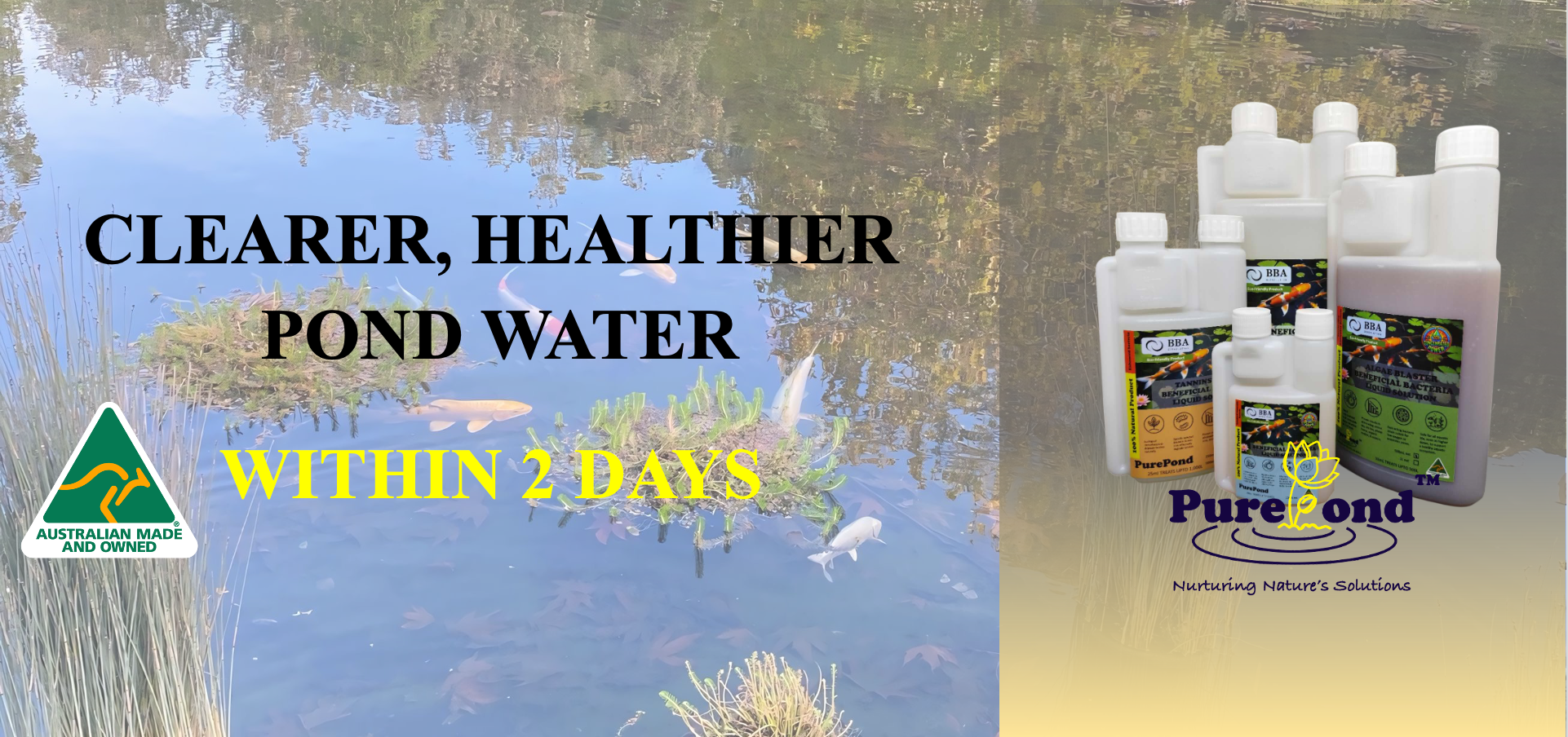
Some pond owners observe changes in water clarity or odour within 2 days, while algae, sludge and biological stability may take longer to improve.

Treatment time depends on:

  • the type and severity of the problem;
  • water temperature;
  • dissolved oxygen and circulation;
  • organic and nutrient loading;
  • filtration;
  • pond maintenance;
  • product selection and dosage.

Heavily affected ponds or ponds with continued nutrient inputs may require repeated treatment and additional physical maintenance.

Why does my pond keep turning green?

Green water is commonly associated with suspended algae supported by sunlight and available nutrients.

Nutrient sources may include:

  • fish waste and uneaten feed;
  • accumulated sludge;
  • leaves and plant debris;
  • fertiliser runoff;
  • decaying algae;
  • inadequate filtration or circulation.

Treating only the visible algae may not address these underlying conditions. Long-term management normally requires a combination of biological treatment, suitable filtration, aeration, debris removal and responsible feeding.

Should I remove visible algae or debris before applying beneficial bacteria?

It is not always essential, but removing excessive algae, leaves and debris can improve treatment efficiency.

Large amounts of decaying organic material can release nutrients back into the water and increase oxygen demand. Physically removing excess material before treatment reduces the biological load and allows the selected bacteria to work under more favourable conditions.

Avoid aggressively disturbing deep black sludge without suitable aeration and a management plan, as this may temporarily reduce oxygen and release trapped compounds into the water.

How much product should I use and how often should I apply it?

Dosage and application frequency vary between PurePond products. Always follow the instructions on the individual product label.

The required amount may depend on:

  • total pond volume;
  • treatment objective;
  • severity of the problem;
  • water temperature;
  • fish and organic loading;
  • aeration and filtration;
  • whether the application is an initial treatment or routine maintenance.

Do not assume that the same dosage applies to Algae Blaster, Tannins Clear, Sludge Away, Bio-Flocculant or general maintenance products.

Contact BBA or an authorised PurePond partner if you are unsure.

Should I turn off UV or ozone when applying beneficial bacteria?

UV sterilisation, ozone and some other disinfection processes may reduce the number or activity of beneficial bacteria passing through the treatment system.

Where appropriate, temporarily switch off UV or ozone during and after dosing, following the product instructions. Ensure that filtration, circulation and aeration continue unless the product label specifically advises otherwise.

The suitable interruption period depends on the product and pond system. If UV or ozone cannot be switched off, contact BBA for application advice.

Can PurePond products be used with other pond treatments?

Compatibility depends on the treatment and its active ingredients.

Chlorine, chloramine, antibiotics, disinfectants, copper-based algaecides and strong oxidising chemicals may inhibit or kill beneficial microorganisms. Avoid applying live bacterial products at the same time unless compatibility has been confirmed.

Allow chemical residues to decline to an appropriate level before applying beneficial bacteria. The required interval varies according to the chemical, concentration, water conditions and treatment history.

Aeration, mechanical filtration and aquatic plants are generally compatible with biological pond management.

Are PurePond products safe for fish, plants, pets and wildlife?

PurePond products are formulated for their intended pond applications and should be used according to the product label and recommended dosage.

Avoid ingestion and eye contact, keep concentrated products away from children and pets, and use appropriate personal protection when handling powders or commercial quantities. Do not exceed the recommended dosage.

Seek advice before use in unusually sensitive ecosystems, breeding systems or environments containing species with specialised water-quality requirements.

What should I do if I do not see the expected results?

First confirm that the correct product and dosage were used for the identified pond problem.

Common factors that may limit biological performance include:

  • low water temperature;
  • insufficient aeration or circulation;
  • incorrect pond-volume calculation;
  • continued nutrient inputs;
  • excessive feeding;
  • heavy sludge accumulation;
  • recent use of chlorine, algaecides or disinfectants;
  • unsuitable pH or water chemistry;
  • inadequate filtration.

Record the treatment date, dosage, pond volume, water temperature and available water-quality results. Photos taken before and after treatment can also help BBA or an authorised partner assess the response.

Do beneficial bacteria replace pond filtration, aeration or maintenance?

No. Beneficial bacteria work best as part of a complete pond-management system.

Each component has a different role:

  • beneficial bacteria support organic matter breakdown and nutrient cycling;
  • mechanical filtration removes suspended solids;
  • biological filtration provides surfaces for microbial activity;
  • aeration supports oxygen-dependent biological processes;
  • plants take up nutrients;
  • physical maintenance removes leaves, algae and accumulated debris.

Biological products support these processes but do not eliminate the need for appropriate pond management.

Will algae return after treatment?

Algae can return if sunlight, nutrients and other favourable conditions remain present. No biological treatment can guarantee that a pond will remain algae-free.

Regular maintenance may reduce the conditions that contribute to recurring algae, particularly when combined with:

  • appropriate feeding;
  • debris and sludge management;
  • adequate filtration and aeration;
  • suitable plant coverage;
  • regular monitoring;
  • product application according to label directions.

The objective is to support a healthier and more stable pond environment, rather than promise permanent elimination of algae.

Batch Variation Notice: This product contains multiple live bacterial strains. As a biological system, minor natural variations between batches may occur.

Slight differences in color or appearance are normal and do not affect product quality, stability, or performance.

Need Help With Your Pond?

Not sure which product is suitable? Use the pond problem guide above or contact BBA technical support or an authorised PurePond partner.